


Why decarboxylating cannabis is important and how do you do it?
Decarboxylation is a crucial process in the preparation of cannabis and other plant-based products, where raw cannabinoids are converted into their active forms through the application of heat. This transformative process unlocks the full potential of cannabis, making its compounds, such as THC and CBD, bioavailable and effective when consumed.
Cannabinoids are chemical compounds found in the Cannabis sativa plant, and they interact with the body’s endocannabinoid system, influencing various physiological processes. In their raw state, cannabinoids exist as acidic precursors, with a carboxyl group attached to their molecular structure. The most notable examples are THCA (tetrahydrocannabinolic acid) and CBDA (cannabidiolic acid), the acidic forms of THC and CBD, respectively.
The process of decarboxylation involves the removal of the carboxyl group from these acidic cannabinoids through the application of heat. This transformation is essential because the acidic forms are not psychoactive or as pharmacologically active as their decarboxylated counterparts. For example, THCA does not produce the characteristic intoxicating effects associated with THC until it undergoes decarboxylation.
Decarboxylation can occur naturally over time, especially with exposure to light, heat, or air. However, to ensure the optimal conversion of cannabinoids, controlled decarboxylation is often performed during the preparation of cannabis-infused products. This process is commonly associated with the preparation of edibles, tinctures, and other consumable forms of cannabis.
The decarboxylation process involves carefully applying heat to cannabis material for a specific duration. The temperature and time parameters play a crucial role in determining the extent of decarboxylation and the preservation of other sensitive compounds in the plant. The general rule is that higher temperatures and longer durations lead to more complete decarboxylation, but there’s a delicate balance to strike to avoid degradation of certain cannabinoids or terpenes.
One of the primary reasons for decarboxylating cannabis is to activate THC, the cannabinoid responsible for the plant’s psychoactive effects. When cannabis is smoked or vaporized, the heat from combustion or vaporization naturally decarboxylates the THCA into THC, allowing it to bind to receptors in the brain and produce the characteristic “high.”
In contrast, when preparing edibles or other infused products, relying on the natural decarboxylation that occurs during cooking may not be sufficient. Therefore, many recipes call for a separate decarboxylation step before incorporating cannabis into the final product. This ensures that the maximum amount of THCA is converted into THC, providing the desired potency.
Beyond THC, decarboxylation is also crucial for activating other cannabinoids like CBD. While CBD is not psychoactive like THC, it has gained popularity for its potential therapeutic benefits. Proper decarboxylation ensures that the CBD in cannabis-infused products is in its active form, ready to interact with the endocannabinoid system.
Moreover, decarboxylation affects the flavor and aroma profile of cannabis products. The process can release and preserve terpenes, aromatic compounds responsible for the distinctive scents associated with different cannabis strains. These terpenes not only contribute to the overall sensory experience but may also have therapeutic effects when combined with cannabinoids in what is often referred to as the entourage effect.
In summary, decarboxylation is a fundamental process in the world of cannabis consumption and product preparation. It involves the application of heat to transform acidic cannabinoids into their active, bioavailable forms, enhancing the potency and efficacy of cannabis-infused products. Whether for recreational or medicinal use, understanding and controlling the decarboxylation process is essential for achieving the desired effects and maintaining the overall quality of cannabis-based products.

Here’s a step-by-step guide on how to decarboxylate cannabis:
Materials Needed:
Raw Cannabis Flower or Trim: The starting material for decarboxylation is raw cannabis. The strain chosen can influence the overall flavor and effects of the final product.
Baking Sheet or Oven-Safe Dish: To evenly spread the cannabis for uniform decarboxylation.
Parchment Paper or Silpat Mat: To prevent the cannabis from sticking to the baking sheet.
Grinder: To break down the cannabis into smaller, more uniform pieces for even decarboxylation.
Oven: A conventional kitchen oven is commonly used for this process.
Oven Thermometer: To monitor and ensure accurate temperature control.
Steps:
Preheat the Oven:
Preheat your oven to a specific temperature, typically between 220°F (105°C) and 240°F (115°C). This temperature range is chosen to activate cannabinoids without degrading them.
Grind the Cannabis:
Using a grinder, break down the cannabis into smaller pieces. This increases the surface area, promoting more efficient and even decarboxylation.
Prepare the Baking Sheet:
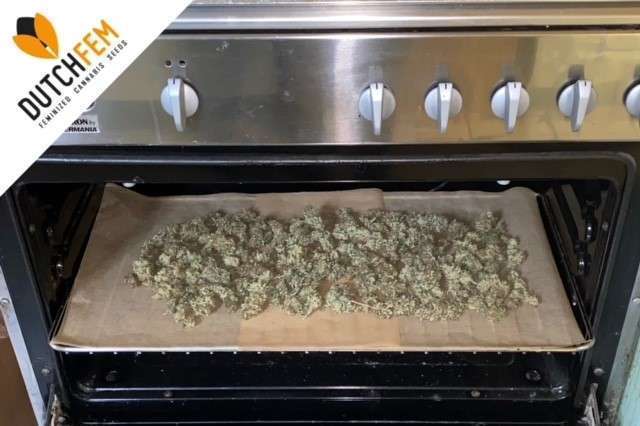
Line the baking sheet with parchment paper or a Silpat mat to prevent the cannabis from sticking. Spread the ground cannabis evenly across the surface.
Decarboxylation Time:
Place the baking sheet with the cannabis in the preheated oven. The decarboxylation process typically takes around 30 to 45 minutes. Longer times may be necessary for lower temperatures.
Stirring (Optional):
Some enthusiasts recommend stirring the cannabis halfway through the process to ensure even decarboxylation. While optional, it can help achieve a more uniform activation of cannabinoids.
Monitor Temperature:
Use an oven thermometer to monitor the temperature inside the oven. It’s crucial to maintain a consistent temperature within the specified range for the entire duration of the process.
Check for Decarboxylation:
Cannabis is decarboxylated when it becomes dry and slightly brown. The process releases carbon dioxide, so you may notice bubbling during decarboxylation.
Cooling:
Allow the decarboxylated cannabis to cool before handling. This ensures that any residual heat doesn’t cause further degradation of cannabinoids.
Once the cannabis has been decarboxylated, it can be used in various culinary applications. The activated cannabinoids can now be readily absorbed by the body when consumed. Whether you’re infusing oils, making edibles, or preparing tinctures, having properly decarboxylated cannabis is essential for achieving the desired potency and effects.
It’s worth noting that the decarboxylation process can be adapted based on personal preferences and the specific requirements of a recipe. Some may choose slightly higher or lower temperatures, and experimentation may be necessary to find the ideal conditions for individual needs. Overall, understanding and mastering the decarboxylation process empower cannabis enthusiasts to create customized and effective products.








You must be logged in to post a comment.