


Overfeeding or Underfeeding Cannabis
Overfeeding or underfeeding cannabis. In cannabis cultivation, achieving the right balance of nutrients is crucial for healthy plant growth and optimal yields. Just like any other plant, cannabis requires a variety of essential nutrients to thrive, but both overfeeding and underfeeding can lead to stress and damage. Nutrient imbalances, whether caused by excess or deficiency, manifest through specific signs that growers must be able to recognize and address quickly.
When cannabis plants receive too much nutrition, they can suffer from nutrient burn and other related issues that can hinder their growth and productivity. On the other hand, when they are underfed, essential nutrients needed for vital functions like photosynthesis, growth, and bud formation become insufficient, leading to stunted development and poor yields. Understanding how to identify these signs early is essential for keeping your plants healthy throughout their lifecycle.
By closely observing your cannabis plants, you can detect the telltale signs of nutrient imbalance. Symptoms such as leaf discoloration, curling, slow growth, and nutrient lockout can serve as warnings that the plant’s nutritional needs are not being met properly. Whether the issue is caused by overfeeding or underfeeding, taking timely corrective actions can help restore balance and ensure a successful harvest.
In this guide, we’ll explore the most common signs of overfeeding and underfeeding in cannabis plants and provide insights into how you can adjust your feeding practices to prevent nutrient stress. Starting with the signs of nutrient excess, we’ll help you understand how to fine-tune your feeding regimen for healthier, more productive plants.
-
Signs of Overfeeding in Cannabis Plants (Nutrient Burn/Excess)
-
Signs of Underfeeding in Cannabis Plants (Nutrient Deficiency)
-
Specific Nutrient Deficiency Symptoms in Cannabis Plants
-
Balancing Nutrition in Cannabis Plants
1. Overfeeding or underfeeding cannabis: Signs of Overfeeding in Cannabis Plants (Nutrient Burn/Excess)
Proper nutrition is essential to cannabis plants’ growth, yield, and potency. However, providing too many nutrients can be just as damaging as providing too few. Overfeeding, or nutrient burn, occurs when cannabis plants are given an excessive amount of nutrients. This can overwhelm their capacity to absorb nutrients properly, leading to a variety of symptoms. Understanding these signs and knowing how to manage nutrient excess is crucial for maintaining healthy cannabis plants.
Let’s delve into some key signs of overfeeding in cannabis and what they indicate.
1. Leaf Tip Burn
Description: One of the earliest and most recognizable signs of overfeeding is leaf tip burn. This happens when the plant absorbs more nutrients than it can process, leading to nutrient salts building up in the soil and plant tissue. The excess salts can then cause chemical burns, beginning at the tips of the leaves.
Appearance: Leaf tip burn manifests as yellow or brown tips on the leaves, starting small but gradually spreading as the issue worsens. Initially, the rest of the leaf may appear healthy, making it easy to overlook in the early stages. However, as the plant continues to be overfed, the burn can spread further down the leaf, turning larger sections brown and eventually causing the leaf to die.
Impact on Plant Health: While leaf tip burn might seem minor at first, it is a clear indicator that your cannabis plant is receiving too many nutrients. If left unchecked, it can escalate, leading to broader nutrient imbalances and a host of other issues such as stunted growth and lower yields. The plant’s ability to photosynthesize may be reduced as damaged leaves lose their ability to capture sunlight effectively, stressing the plant further.
Cause and Prevention: Leaf tip burn is most often associated with too much nitrogen or general overfeeding. The solution to leaf tip burn is to reduce the feeding regimen and flush the growing medium with pH-balanced water. This helps to wash away excess salts and nutrients that have accumulated in the soil. After flushing, allow the plant to recover and reassess your feeding schedule to prevent further damage.
2. Dark Green Leaves
Description: Another clear sign of overfeeding, particularly of nitrogen, is when the leaves turn an unusually dark green. Nitrogen is a key nutrient for plant growth, but too much of it can cause the leaves to take on a deep green hue, which is a warning sign of excess nitrogen.
Appearance: Healthy cannabis leaves are generally a vibrant green. However, when a plant is receiving too much nitrogen, the green becomes darker and more intense, giving the plant an unnatural appearance. The leaves may also become thick, leathery, and slightly shiny, which contrasts with the softer texture of healthy foliage.
Impact on Plant Health: Excess nitrogen primarily affects the plant’s foliage, but the problem goes deeper. While nitrogen is essential for vegetative growth, too much of it can stunt flower production during the flowering stage. This is because the plant focuses its energy on producing more leaves instead of developing buds. Excess nitrogen can also lead to other nutrient imbalances, as it may interfere with the uptake of essential nutrients like potassium and phosphorus.
Cause and Prevention: Overfeeding with high-nitrogen fertilizers during the vegetative stage is the most common cause of dark green leaves. To prevent this, follow feeding schedules carefully and be mindful of the nutrient requirements at each stage of growth. If you notice this symptom, reduce nitrogen-rich fertilizers and ensure that other key nutrients are not being neglected.
3. Curling Leaves (Clawing)
Description: When cannabis leaves receive too many nutrients, especially nitrogen, they can start to curl downward, forming what is often referred to as “the claw.” This curling is a protective response by the plant to avoid absorbing more nutrients than it can handle.
Appearance: Clawing leaves appear as though they are bent at the base or tip, curling downward like a claw. Unlike healthy leaves that grow outwards and towards the light, clawing leaves take on a droopy appearance, and the stems may also become weak. In severe cases, the leaves may twist or curl in unnatural ways, further indicating distress.
Impact on Plant Health: Clawing is not only a sign of overfeeding but also a signal that the plant is stressed. Over time, clawing leaves will lose their ability to perform essential functions like photosynthesis, hindering growth and development. Additionally, clawing can be accompanied by other issues like slowed growth, nutrient lockout, and leaf tip burn, compounding the plant’s overall stress.
Cause and Prevention: Excess nitrogen is the primary cause of clawing leaves. It’s important to address the issue as soon as it appears. Start by flushing the growing medium to remove excess nutrients and adjust your feeding schedule to a lower nitrogen concentration. Keep an eye on the plant’s progress over the next few days and monitor new growth for signs of improvement.
4. Stunted Growth
Description: One of the more indirect but serious consequences of overfeeding is stunted growth. Even though the plant may appear lush and green at first, too many nutrients can actually slow its overall development.
Appearance: A plant experiencing stunted growth will show limited vertical or horizontal expansion. This means fewer branches, smaller leaves, and delayed flower production. Even if the plant looks otherwise healthy, its growth may seem to have plateaued, with little to no progress over time.
Impact on Plant Health: Stunted growth is a major concern because it can significantly reduce the plant’s yield. When the plant is overfed, it diverts energy to processing the excess nutrients rather than focusing on new growth or flowering. Over time, this can lead to smaller plants with fewer buds, meaning that even if the plant survives, its potential harvest will be greatly diminished.
Cause and Prevention: Overfeeding during the vegetative stage can lead to stunted growth, as the plant becomes overwhelmed by an excess of nutrients. To prevent this, follow the recommended nutrient feeding schedules and ensure that you are not overfeeding during critical growth stages. If you notice stunted growth, reduce feeding and give the plant time to recover.
5. Nutrient Lockout
Description: Perhaps the most severe consequence of overfeeding is nutrient lockout. This occurs when the excessive buildup of nutrients in the soil or growing medium actually prevents the plant from absorbing key nutrients. Even though the nutrients are present, the plant is unable to take them up, leading to deficiencies and health problems.
Appearance: Nutrient lockout can cause a variety of symptoms, depending on which nutrients the plant is unable to absorb. These may include yellowing leaves, leaf tip burn, curling, stunted growth, and even purpling of the stems or leaves. The plant may display symptoms of nutrient deficiency, even though the soil is rich in those nutrients.
Impact on Plant Health: Nutrient lockout is a serious problem because it deprives the plant of essential nutrients, even when they are present in the growing medium. Over time, the plant will become more stressed, leading to poor growth, reduced bud development, and a lower-quality harvest.
Cause and Prevention: Nutrient lockout is often caused by overfeeding or improper pH levels. To prevent it, it’s important to maintain a balanced pH in the soil and ensure that nutrients are provided in the correct amounts. If you suspect nutrient lockout, flush the growing medium with pH-balanced water to remove excess salts and reset the plant’s ability to absorb nutrients.
By being aware of these signs of overfeeding, growers can take corrective action to maintain the health and vitality of their cannabis plants. A balanced nutrient regimen, regular monitoring, and proper pH management are key to avoiding these common issues.

2. Overfeeding or underfeeding cannabis: Signs of Underfeeding in Cannabis Plants (Nutrient Deficiency)
Underfeeding cannabis plants, or not providing them with enough nutrients, can severely impact their growth, yield, and overall health. When cannabis doesn’t receive the necessary nutrients in the correct amounts, it begins to show clear signs of stress, often manifesting as various deficiencies. Each nutrient plays a specific role in the plant’s development, and a lack of any one of them will result in noticeable physical symptoms. Unlike overfeeding, where the plant suffers from excesses, underfeeding results in the plant being deprived of vital elements, leading to weak, stunted growth and poor productivity.
Let’s explore the key signs of nutrient deficiencies in cannabis plants and how they affect growth.
1. Yellowing Leaves (Chlorosis)
Description: One of the most common and easily identifiable signs of nutrient deficiency in cannabis plants is chlorosis, or the yellowing of leaves. Chlorosis often begins in the older, lower leaves when the plant experiences a nitrogen deficiency. Nitrogen is a crucial element in chlorophyll production, which gives leaves their green color and enables them to capture light for photosynthesis. When nitrogen levels are insufficient, the plant will prioritize new growth, pulling nitrogen from older leaves, resulting in yellowing.
Appearance: The yellowing typically starts at the tips and edges of the leaves and progresses inward. In severe cases, entire leaves may turn yellow, eventually dying and falling off. This usually occurs on the lower parts of the plant first, as nitrogen is mobile and will be redirected to newer growth.
Impact on Plant Health: Nitrogen deficiency during the vegetative stage can drastically affect the plant’s ability to photosynthesize, slowing its overall growth and weakening its structure. If left unaddressed, nitrogen deficiency can cause the plant to become underdeveloped, with fewer leaves to sustain healthy growth and inadequate energy to support bud formation during flowering.
Cause and Prevention: Nitrogen deficiency is most common when the plant is not fed adequately during its vegetative growth phase. To prevent chlorosis, ensure that you are providing a well-balanced nutrient regimen with sufficient nitrogen. If you notice early signs of yellowing, a nitrogen-rich fertilizer or organic compost can help restore balance. It’s important to also check the pH of the growing medium, as improper pH can lock out nitrogen, even if it’s present in the soil.

2. Purple or Red Stems
Description: Another sign of underfeeding in cannabis plants is the development of purple or red stems, which often points to a phosphorus deficiency. Phosphorus is vital for energy transfer, root development, and bud growth, especially during the flowering stage. While some cannabis strains naturally produce purple or red stems due to genetics, if these colors appear suddenly or in conjunction with other symptoms, it could indicate a lack of phosphorus.
Appearance: When phosphorus deficiency occurs, stems can turn reddish or purple, and this discoloration often starts in the stems of the leaves and may spread to the main branches. This symptom is more pronounced in cooler temperatures, as the plant’s ability to absorb phosphorus is reduced when the soil is cold.
Impact on Plant Health: Phosphorus deficiency can severely impact a cannabis plant’s growth, particularly during the flowering stage. Without enough phosphorus, the plant struggles to produce strong roots and will be unable to support robust bud development. This can result in smaller, lower-quality yields and weak plant structure overall.
Cause and Prevention: Phosphorus deficiency often arises when the plant is transitioning from the vegetative to the flowering stage, as its phosphorus needs increase. Using a flowering-stage fertilizer that is high in phosphorus will help to meet these demands. Maintaining proper soil pH (between 6.0 and 7.0 for soil and 5.5 to 6.5 for hydroponics) is also essential, as improper pH can hinder phosphorus absorption.
3. Slow or Weak Growth
Description: Slow or weak growth is a common sign of overall nutrient deficiency, indicating that the plant is not receiving the necessary elements to fuel its development. Cannabis plants require a broad spectrum of nutrients—such as nitrogen, phosphorus, potassium, calcium, magnesium, and sulfur—to thrive. When one or more of these nutrients is lacking, the plant’s growth can slow down significantly.
Appearance: A plant suffering from slow or weak growth will appear smaller than expected for its age, with thin stems, fewer leaves, and a general lack of vigor. In some cases, the plant may fail to develop new leaves or buds altogether, remaining in a state of stagnation. Growth may be spindly, and the plant may struggle to hold itself upright, especially during the flowering stage when it needs strength to support its buds.
Impact on Plant Health: Slow growth during the vegetative stage means that the plant will not reach its full potential size, resulting in smaller yields. During flowering, weak growth can lead to fewer and smaller buds, directly affecting the overall harvest. Additionally, a weak plant is more susceptible to pests, diseases, and environmental stressors.
Cause and Prevention: A lack of essential nutrients is the primary cause of slow growth. Ensuring the plant receives balanced nutrition at each stage of its growth cycle is key to preventing this issue. Pay close attention to signs of deficiencies and adjust feeding schedules accordingly, increasing nutrients as the plant matures. Ensuring the growing medium has adequate aeration and drainage will also support healthy root development, which is critical for nutrient uptake.
4. Spots and Discoloration on Leaves
Description: Spots and discoloration on cannabis leaves are a sign of specific nutrient deficiencies, most commonly magnesium or calcium. Magnesium plays a vital role in photosynthesis and the formation of chlorophyll, while calcium is crucial for cell wall structure and overall plant health. Deficiencies in either of these nutrients can lead to the appearance of spots on the leaves.
Appearance: Magnesium deficiency often causes interveinal chlorosis, where the areas between the leaf veins turn yellow while the veins themselves remain green. This condition usually starts on older leaves and progresses upward. Calcium deficiency, on the other hand, leads to the development of brown or white spots on the leaves, particularly near the edges. These spots may expand over time, causing leaf tissue to die off and creating a mottled appearance.
Impact on Plant Health: If left uncorrected, magnesium or calcium deficiency can weaken the plant’s ability to produce energy through photosynthesis, leading to stunted growth, poor bud formation, and susceptibility to environmental stressors. Over time, the leaves may die, further reducing the plant’s capacity to grow and develop.
Cause and Prevention: Magnesium and calcium deficiencies are often caused by pH imbalances or the use of soft water, which lacks these minerals. To prevent these deficiencies, ensure that the growing medium’s pH is within the correct range and consider using a calcium-magnesium supplement if your water source is lacking in minerals. Regularly check for early signs of spotting and discoloration to address the issue before it becomes severe.
5. Leaf Deformation
Description: Leaf deformation, where leaves become twisted, curled, or otherwise misshapen, is another sign of nutrient deficiency. This is most commonly caused by a lack of calcium or sulfur, both of which are essential for healthy leaf and root development. Calcium supports strong cell walls, while sulfur is involved in the production of amino acids and proteins.
Appearance: Twisted or deformed leaves may appear shriveled, with uneven growth patterns or curling edges. In some cases, leaves may have a crinkled texture or develop holes and tears as they grow. Leaf deformation typically starts on new growth and is more pronounced on the upper parts of the plant.
Impact on Plant Health: Deformed leaves not only look unhealthy but also hinder the plant’s ability to photosynthesize and grow efficiently. A lack of sulfur can also lead to delayed flowering and poor bud development, affecting the overall quality and yield of the plant.
Cause and Prevention: Calcium and sulfur deficiencies are often related to poor-quality soil or improper pH levels. Providing a balanced nutrient regimen that includes all essential elements is key to preventing leaf deformation. Regularly monitor your plant’s leaves for signs of twisting or curling and make adjustments to your feeding routine as needed.
Underfeeding cannabis plants can have serious consequences on their overall health, growth, and yields. Recognizing the signs of nutrient deficiency, such as yellowing leaves, purple stems, slow growth, spots, and leaf deformation, allows growers to take corrective action before the plant’s condition worsens. Ensuring a balanced nutrient regimen, proper pH levels, and adequate feeding schedules will help keep your cannabis plants healthy and thriving throughout their lifecycle.
3. Specific Nutrient Deficiency Symptoms in Cannabis Plants
Nutrient deficiencies in cannabis plants can lead to various visible symptoms that affect their overall health, growth, and yield. Each nutrient plays a specific role in the plant’s development, and a deficiency in any one of them can have a significant impact. Identifying the specific symptoms associated with each nutrient deficiency allows growers to take corrective action early. Here are the key symptoms of deficiencies in the most essential nutrients for cannabis plants:
1. Nitrogen (N) Deficiency
Symptoms:
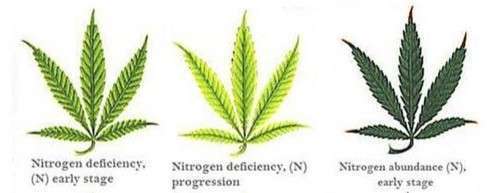
- Yellowing Leaves: One of the most common signs of nitrogen deficiency is the yellowing of older leaves, a condition known as chlorosis. As nitrogen is mobile within the plant, it is pulled from older growth to support new growth, resulting in yellowing starting from the bottom of the plant.
- Slow Growth: Nitrogen is essential for photosynthesis and vegetative growth. When deficient, the plant’s overall growth slows down, leading to smaller, weaker plants.
- Smaller Plants: The lack of nitrogen limits the plant’s ability to develop large, healthy leaves and stems, resulting in stunted growth and smaller plant size.
Solution: Increase nitrogen levels in the feeding regimen during the vegetative stage, as this nutrient is crucial for promoting healthy, green foliage.
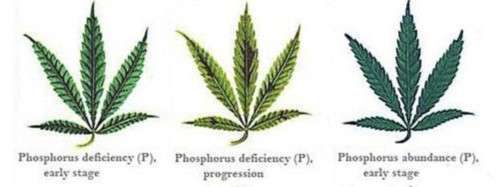
2. Phosphorus (P) Deficiency
Symptoms:
- Purple Stems: One of the hallmark signs of phosphorus deficiency is the appearance of purple or reddish stems. This discoloration is often accompanied by other symptoms, particularly during colder temperatures.
- Dark Green Leaves: Phosphorus deficiency may also cause leaves to turn a dark, almost bluish-green. This can be a sign that the plant is struggling to generate energy.
- Stunted Growth: Phosphorus is essential for energy transfer and root development. A deficiency in this nutrient can lead to slower root growth and overall stunted development, especially during the flowering stage.
Solution: Use a phosphorus-rich fertilizer, particularly during the flowering phase, when the plant’s demand for this nutrient increases.
3. Potassium (K) Deficiency
Symptoms:
- Yellow/Brown Edges on Older Leaves: Potassium deficiency typically presents as yellowing and browning along the edges and tips of older leaves, starting at the bottom of the plant. The leaves may become dry and brittle as the deficiency progresses.
- Weak Stems: Potassium is vital for strong cell walls and overall plant structure. A lack of potassium can cause weak, flimsy stems that struggle to support the plant’s growth, especially during the flowering phase.
Solution: Increase potassium levels, especially during the later stages of growth, to ensure the plant can build strong stems and develop healthy buds.

4. Calcium (Ca) Deficiency
Symptoms:
- Crinkling of Leaves: Calcium is essential for cell wall structure, and its deficiency causes leaves to crinkle and distort. The leaves may also have a wrinkled or deformed appearance, particularly in new growth.
- Slow Growth: Without enough calcium, the plant’s growth will slow significantly, particularly at the root level.
- Dead Spots: Calcium deficiency often causes necrotic spots, or dead areas, to form on the leaves. These spots can worsen over time and spread to other parts of the plant.
Solution: A calcium supplement or a balanced nutrient formula containing calcium will help resolve this issue. Monitoring pH levels is also important, as improper pH can block calcium uptake.

5. Magnesium (Mg) Deficiency
Symptoms:
- Interveinal Chlorosis: Magnesium deficiency often causes interveinal chlorosis, where the areas between the veins of the leaves turn yellow, while the veins themselves remain green. This typically affects older leaves first.
- Reddish/Purple Stems: In some cases, magnesium deficiency can also cause the stems to turn reddish or purple, although this can overlap with other deficiencies.
Solution: Apply a magnesium supplement (like Epsom salts) to the soil or water to quickly correct this deficiency.

6. Iron (Fe) Deficiency
Symptoms:
- Yellowing of New Leaves: Iron deficiency typically presents as chlorosis in new leaves, where the leaves turn yellow but the veins remain green. This distinguishes iron deficiency from other nutrient deficiencies that usually affect older growth.
- Slow New Growth: Without enough iron, the plant struggles to produce chlorophyll in new growth, leading to a reduction in the rate of new leaf development.
Solution: Adjust the pH of the growing medium and use iron-rich fertilizers or chelated iron supplements to address this issue.

Understanding these specific nutrient deficiency symptoms helps cannabis growers diagnose problems early and take targeted actions to restore their plants to health. Proper nutrition, combined with careful pH monitoring, is key to ensuring healthy, productive cannabis plants throughout their lifecycle.
4. Overfeeding or underfeeding cannabis: Balancing Nutrition in Cannabis Plants
Maintaining the right nutrient balance is crucial for the healthy growth and development of cannabis plants. Both overfeeding and underfeeding can stress the plants, leading to poor yields, nutrient lockout, or nutrient deficiencies. Understanding how to restore balance after issues arise is key to cultivating healthy, productive cannabis plants. Whether you’re dealing with nutrient burn from overfeeding or slow growth due to underfeeding, taking the right corrective measures is essential. Here’s how to properly balance nutrition in cannabis cultivation:
Overfeeding: Flushing the Growing Medium
Overfeeding, or providing too many nutrients, is a common issue in cannabis cultivation, especially for new growers who may think that more nutrients lead to faster growth. However, an excess of nutrients can overwhelm the plant, causing nutrient burn, stunted growth, and nutrient lockout (where the plant can’t absorb certain nutrients due to oversaturation). One of the most effective ways to resolve overfeeding is by flushing the plant’s growing medium.
How to Flush the Medium:
Flushing involves saturating the plant’s growing medium with plain, pH-balanced water to wash away the excess nutrients. This process helps remove the buildup of nutrients in the soil or hydroponic system, allowing the plant to reset. Here’s how to properly flush your plants:
- Use pH-Balanced Water: Ensure the water you use for flushing is within the correct pH range (6.0-7.0 for soil, 5.5-6.5 for hydroponics) to prevent nutrient lockout.
- Water Generously: Slowly pour water into the growing medium until it runs out of the bottom of the pot. For soil, use 2-3 times the volume of the pot in water. For hydroponics, flush the system by running plain water through the setup for a day or two.
- Monitor Runoff: Check the pH of the runoff water to ensure it’s within the correct range. This helps confirm that the excess nutrients have been removed.
- Reintroduce Nutrients Slowly: After flushing, give your plants a mild dose of nutrients to avoid shocking them with a nutrient-free environment.
By flushing the growing medium and restoring a balanced nutrient schedule, plants can recover from overfeeding and return to healthy growth.

Underfeeding: Gradual Introduction of Nutrients
Underfeeding, or providing too few nutrients, can cause slow growth, nutrient deficiencies, and weak plant development. Unlike overfeeding, where the plant suffers from an excess of nutrients, underfeeding means the plant lacks essential elements for proper growth. The solution here is to gradually introduce more nutrients without overwhelming the plant.
How to Correct Underfeeding:
- Start with a Balanced Feeding Schedule: Begin by providing a balanced nutrient solution that contains the key macronutrients (nitrogen, phosphorus, potassium) and micronutrients (calcium, magnesium, iron, etc.) in the appropriate ratios for the plant’s current growth stage (vegetative or flowering).
- Increase Nutrients Gradually: Avoid shocking the plant by suddenly increasing the nutrient levels. Start with a mild dose and gradually increase it based on the plant’s response. Monitor the leaves and overall growth for signs of improvement.
- Monitor Nutrient Ratios: Different growth stages require different nutrient ratios. For instance, during the vegetative stage, cannabis plants need more nitrogen, while the flowering stage demands higher phosphorus and potassium levels. Ensure your feeding schedule is aligned with the plant’s stage.
- Check for Deficiencies: Regularly inspect your plants for signs of nutrient deficiencies, such as yellowing leaves (nitrogen deficiency) or purple stems (phosphorus deficiency). If any deficiencies are spotted, adjust the feeding schedule accordingly by adding the necessary nutrients.
By carefully adjusting nutrient levels, underfed plants can regain their strength and resume healthy growth.
Monitoring pH, Nutrient Schedule, and Plant Health
Whether you are trying to avoid overfeeding or underfeeding, careful monitoring of several factors is crucial to maintaining balanced nutrition for cannabis plants. Here’s what to focus on:
- pH Level: The pH of your growing medium affects nutrient uptake. Even if the right nutrients are present, the plant can’t absorb them if the pH is off. Use a pH meter to regularly check both the water and the runoff, ensuring that they fall within the optimal range for cannabis plants.
- Nutrient Schedule: A consistent feeding schedule that is tailored to the plant’s growth stage is essential. Cannabis plants have different nutrient needs during the vegetative and flowering stages, so adjust your schedule accordingly. Over time, you’ll develop a feeding routine that works best for your specific strain and growing environment.
- Plant Health: Keep a close eye on your plants for early signs of stress, such as discoloration, curling leaves, or stunted growth. Regularly inspecting the leaves, stems, and overall growth pattern can help you catch nutrient imbalances early and make the necessary adjustments before the issue worsens.
By managing these elements carefully, growers can prevent both overfeeding and underfeeding, ensuring that their cannabis plants receive the proper nutrition they need for robust, healthy growth and maximum yields. Balancing nutrition is key to achieving a successful and productive cannabis harvest.
Understanding Yellow Leaves on Cannabis Plants: 6 Key Reasons
Nutrient Lockout in Cannabis Cultivation
The Importance of pH in Cannabis Cultivation








You must be logged in to post a comment.